

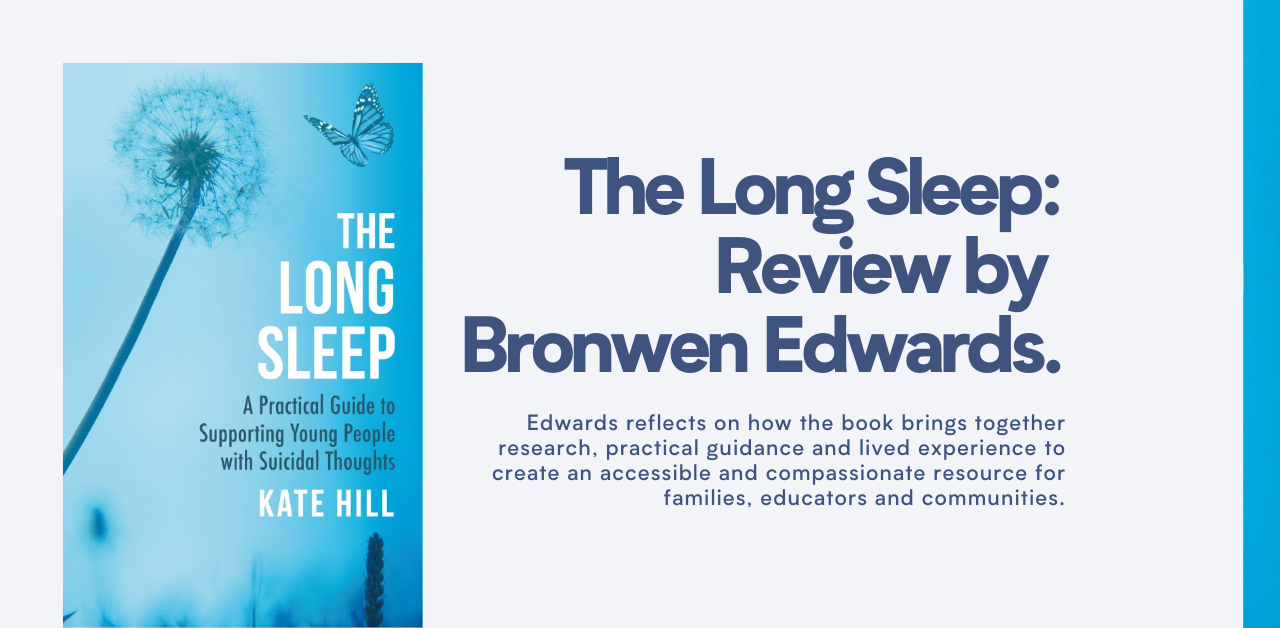
IASP’s Special Interest Group on Lived Experience Co-Chair, Bronwen Edwards, has written a thoughtful review of The Long Sleep: A Practical Guide to Supporting Young People with Suicidal Thoughts by Kate Hill. In her review, Edwards reflects on how the book brings together research, practical guidance and lived experience to create an accessible and compassionate resource for families, educators and communities. Drawing on both her personal and professional experience, she highlights the book’s value in helping readers better understand and respond to youth suicide risk, while offering sensitive and considered advice for those engaging with this important and challenging topic.
“The Long Sleep: A Practical Guide to Supporting Young People with Suicidal Thoughts”
Author – Kate Hill, Robinson (2024)
From its opening pages, “The Long Sleep” confronts readers with an uncomfortable truth: the pressures facing young people today are not new phenomena, but rather intensifying crises, many of which were already visible three decades ago when author Kate Hill first highlighted them in the first edition of this book. This sobering realisation sets the tone for a book that manages to be both accessible and deeply serious in its exploration of youth suicide.
The book’s greatest strength lies in the way in which lived experience stories of young people and those who love them are woven throughout, elucidating their fears and helplessness alongside their courageous spirit and strength.
Kate and her sister Anna, through the second edition, are to be commended for their ability to translate complex suicide research, theoretical models, and confronting realities into language that community members, educators, and families can genuinely understand. Too often, discussions of suicide remain locked behind academic terminology and frameworks that exclude the very people who need this knowledge most. ‘The Long Sleep’ closes this gap without oversimplifying the profound complexity of suicide itself, a delicate balance that demonstrates both expertise and respect for the people who have walked in the shoes of suicide.
Throughout the text, lived experience quotes provide powerful testimony that grounds theoretical discussions in human reality. These voices add authenticity and emotional resonance to the various topics explored, reminding readers that behind every statistic and model lies someone’s lived pain and struggle.
As a person who spent many years trying to support my brother to stay alive before losing him to suicide and later supporting another member of my family through years of suicidal distress and crisis, I know the information in this book would have been helpful. I always feared that I would not know the difference between ‘the teenage years’ and a teenager at risk of suicide. During those years, being able to reach into my own extensive network of friends and colleagues with lived experience of suicide, including young people who had experienced their own suicidality, was what gave me the greatest confidence, comfort and hope in my supporting role. I’m acutely aware that I was, ironically, in a privileged position to have access to so many people with lived experience at that time, only possible because of the work I chose to do after losing my brother.
“The Long Sleep” offers important insights into understanding youth suicide and makes crucial research accessible to broader audiences. Even more importantly, in my opinion, it centres lived experience as a legitimate form of evidence in its own right, providing priceless insight into what young people are thinking, feeling, concerned about, and the types of approaches and supports that they connect with.
Readers will find much of value here – an informative and practical guide that reads like a story and can be picked up again as a useful reference in times of need.
I have just one note of caution for readers – there are numerous mentions of suicide methods throughout the book. Whilst evidence tells us that talking about suicide itself will not put an idea in people’s minds, the mentioning of suicide methods can provide someone who is actively planning to end their life with ideas of ‘how’. This can also often cause distress to those who have made an attempt on their life or are bereaved by suicide. So please, choose a time when you feel ready and supported to read, and ensure you have someone you trust who you can call if you need to chat.
Bronwen Edwards
Founding CEO, Roses in the Ocean
This new edition of The Long Sleep has been revised and edited by Kate’s sister, Anna Hill, with support from Dr. Ailsa Snaith, Dr. Andrew Parsons, and includes input from an interdisciplinary editorial team of young people and professionals. Kate’s groundbreaking work and the stories she captured have been complemented with up-to-date insights to ensure their continued positive impact on young lives today. Further details can be found here.