

The World Health Assembly is the annual decision-making meeting of the World Health Organization, bringing together its 194 Member States to review the state of global health and agree shared priorities. The topics that gain attention here help shape what countries focus on, fund and act upon at home, which is why securing a place for suicide prevention on this agenda matters so much.
Mental health and suicide prevention featured throughout the 79th World Health Assembly (WHA79) in May, particularly raised across agendas spanning non-communicable diseases, universal health coverage, digital governance and the future of global health itself, and through three dedicated side events in which IASP partnered.
Throughout the formal agenda discussion on NCDs and mental health, several delegations, among them Fiji, Japan, Kenya, Nepal and Suriname, spoke directly to suicide prevention, national strategies, helplines and the decriminalisation of suicide. Youth delegates from Germany, Denmark and Ethiopia also called for young people to move from consultation to genuine co-leadership.
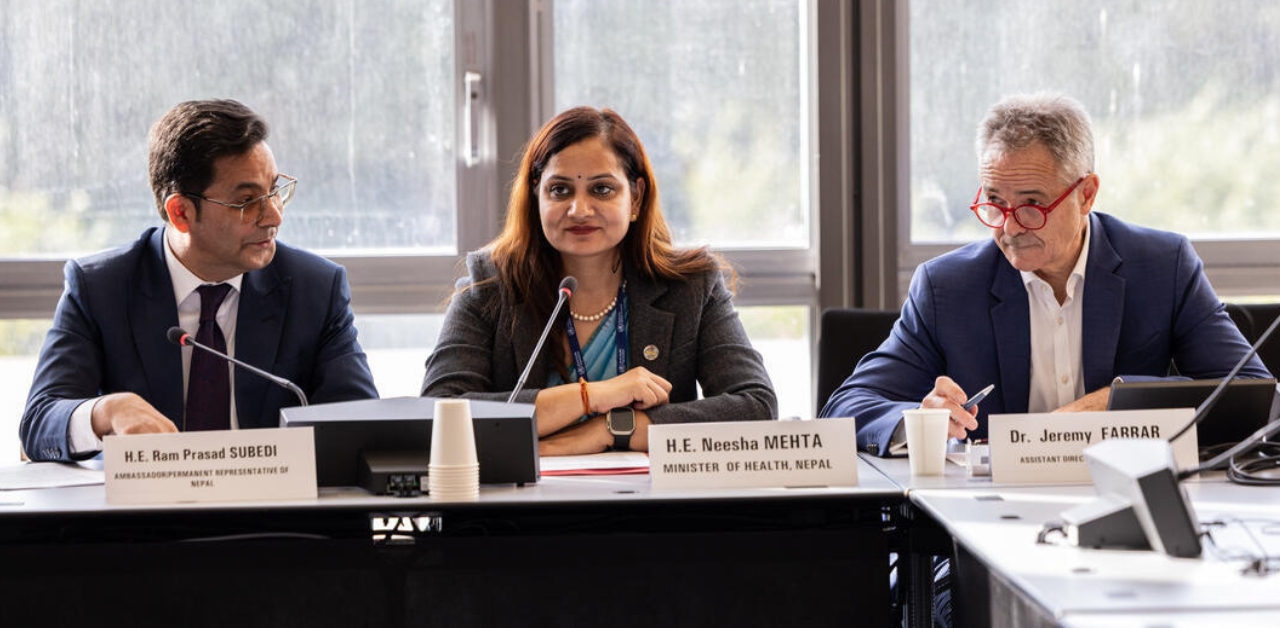
The first side event reflected some of these commitments. A Global Pursuit of Suicide Prevention: Journey from Evidence to Action, brought together Ministers of Health from Nepal, Sri Lanka, and Portugal, alongside representatives from Pakistan, Brazil, South Africa, Nigeria, the World Health Organization, the Centre Pesticide Suicide Research, Zero Suicide International, the International Association for Suicide Preventionand other leading experts, organisations, and government representatives from around the world. It reinforced a clear and urgent message. Suicide is preventable, but the gap between evidence and action continues to cost lives. The reduction of the suicide rate remains the only mental health-related indicator within the Sustainable Development Goals, and progress is not advancing quickly enough.
A central focus was the effectiveness of restricting access to lethal means, particularly through pesticide regulation. Evidence included Sri Lanka’s reduction in suicide rates following bans on highly hazardous pesticides, along with recent action in South Africa and Nepal, demonstrating the growing momentum behind policy-driven prevention. The discussion emphasised that suicide prevention requires whole-of-government and whole-of-society action, and WHO’s LIVE LIFE framework was widely endorsed as a practical public health approach.
IASP contributed through its President, Professor Jo Robinson AM. She emphasised the importance of framing suicide firmly as a population-level public health issue, strengthening upstream prevention such as means restriction alongside clinical approaches. She drew attention to groups too often left behind, including women and girls in lower-resource settings and young people in increasingly complex digital environments. She underlined the importance of co-design with people with lived experience.
These themes were also reflected across the wider Assembly. In the discussion on universal health coverage, Member States reinforced that mental health and NCDs cannot be separated from the UHC agenda, with the greatest gaps falling on low and middle-income countries. The agenda item on well-being and health promotion, including the outcome of the WHO Commission on Social Connection, drew attention to social isolation and loneliness as significant and modifiable determinants of health. IASP welcomed this focus, reiterating the close links between social connection, suicide risk and its prevention.
The week’s focus on pesticide suicide continued at a session titled The Global Problem of Pesticide Suicides: The Time to Act is Now, organised by Sri Lanka, Guyana, Kenya, Nigeria and Pakistan in collaboration with the UN Environment Programme, IASP and the Centre for Pesticide Suicide Prevention. With pesticide poisoning responsible for around a fifth of all suicides worldwide, the discussion challenged the perception that this is primarily a South Asian concern, drawing on experience from Asia, Africa and South America. Speakers set out clear evidence that regulation works. Sri Lanka’s series of pesticide bans is estimated to have saved 93,000 lives, with no measurable impact on agricultural production, and Bangladesh described continuing efforts to ban further lethal compounds. The session also underlined the importance of reliable data and the decriminalisation of suicide in addressing underreporting, and emphasised that prevention requires coordinated action across the health, agriculture and environment sectors. The recurring message was that pesticide suicide is preventable, and that bans on acutely toxic, highly hazardous pesticides offer a clear and practical solution. The Centre for Pesticide Suicide Prevention called on countries to sign a joint ministerial statement committing to the progressive restriction or elimination of these pesticides.
The proposed reform of the global health architecture framed much of the week’s discussion, as well as data, digital health and artificial intelligence being highlighted as a central consideration in progress towards health goals. With new figures estimating that 1.2 billion people are now living with mental health conditions, IASP argued that mental health must sit at the centre of that global health architecture, rather than on the periphery of reform.
As a non-state actor in official relations with WHO, IASP delivered individual statements across these items, consistently calling for fully resourced national suicide prevention strategies, the decriminalisation of suicide, action on the social and commercial determinants of mental health, and the meaningful inclusion of people with lived experience at every stage of policy design.
As the Assembly closed, it was clear that commitments now exist that must be translated into progress for mental health and suicide prevention worldwide. IASP extends its thanks to all those who advanced these conversations, including the Ministries of Health of Nepal, Sri Lanka, South Africa and Kenya, Zero Suicide International, the Centre for Pesticide Suicide Prevention, Henry Ford Health, the University of Edinburgh, Orygen, Safe Online and Crisis Text Line.